






FAQs
You’re not alone. Find support groups and local resources where you can talk openly and get help.
What is a gambling disorder?
Gambling is a recognized disorder by the DSM-IV as behavior which causes disruptions in any major area of life: psychological, physical, social, or vocational.
What are essential features of problem gambling?
• Increasing preoccupation with gambling
• A need to bet more money more frequently
• Restlessness or irritability when attempting to stop
• “Chasing” losses
• Loss of control shown by continuing to gamble despite serious negative consequences.
• In extreme cases, problem gambling can result in financial ruin, legal problems, loss of career and family, or even suicide
Is problem gambling only a financial problem?
NO. Problem gambling is an emotional problem that has financial consequences. If you pay all of a problem gambler’s debts, the person will still be a problem gambler. The real problem is that they have an uncontrollable problem with gambling.
How much money do you have to lose before gambling becomes a problem?
The amount of money lost or won does not determine when gambling becomes a problem. Gambling becomes a problem when it harms any area of the individual’s life.
How can someone be addicted to something that is not a substance?
People with gambling disorders get the same affect from gambling as someone else might get from taking a drug or having a drink. It alters the person’s mood and the gambler keeps repeating the behavior attempting to achieve that same effect. But just as tolerance develops to drugs or alcohol, the gambler finds that it takes more and more of the gambling experience to achieve the same emotional effect as before. This creates an increased craving for the activity and the gambler finds they have less and less ability to resist as the craving grows in intensity and frequency.
What kind of people become problem gamblers?
Anyone who gambles can develop problems if they are not aware of the risks and do not gamble responsibly. When gambling behavior interferes with finances, relationships, and the workplace, a serious problem already exists.
What can we, as a family, do to help?
Educate yourself on gambling addiction. This problem is different than alcohol and drug addiction. Next, set boundaries with your loved one and stick to them. Receive support or counseling from others on these boundaries. Discuss with a professional the option of conducting an intervention, if necessary.
Why can’t a person simply use willpower to stop gambling?
If they could, they would. Most people come to recognize their lack of power to solve certain problems, including gambling, were not working. Many people have abstained from gambling for long periods only to be caught off guard and under the right set of circumstances, start gambling again. The defense of willpower alone didn’t seem to work well on its own.
How widespread is problem gambling in the U.S.?
Two million (1%) U.S. adults are estimated to meet the criteria for gambling disorder in a given year. Another 4 million to 6 million (2% to 3%) would be considered problem gamblers; that is, they do not meet the full diagnostic criteria for gambling disorder but meet one or more of the criteria and are experiencing problems due to their gambling behavior. Research also indicates that most adults who gamble can do so responsibly.
Where can someone go for help?
Call or text the Louisiana Problem Gamblers Helpline at 877-770-STOP (7867). The helpline is available 24/7 and it’s toll-free and confidential. You can also connect to a 988 specialist if you need emergency emotional support.
Find a gambling service provider throughout the state HERE.
Downloadable Resources
Looking for information you can print and share? These free resources provide education about problem gambling along with guidance and tools for individuals, families, and professionals. Click below to view and download.
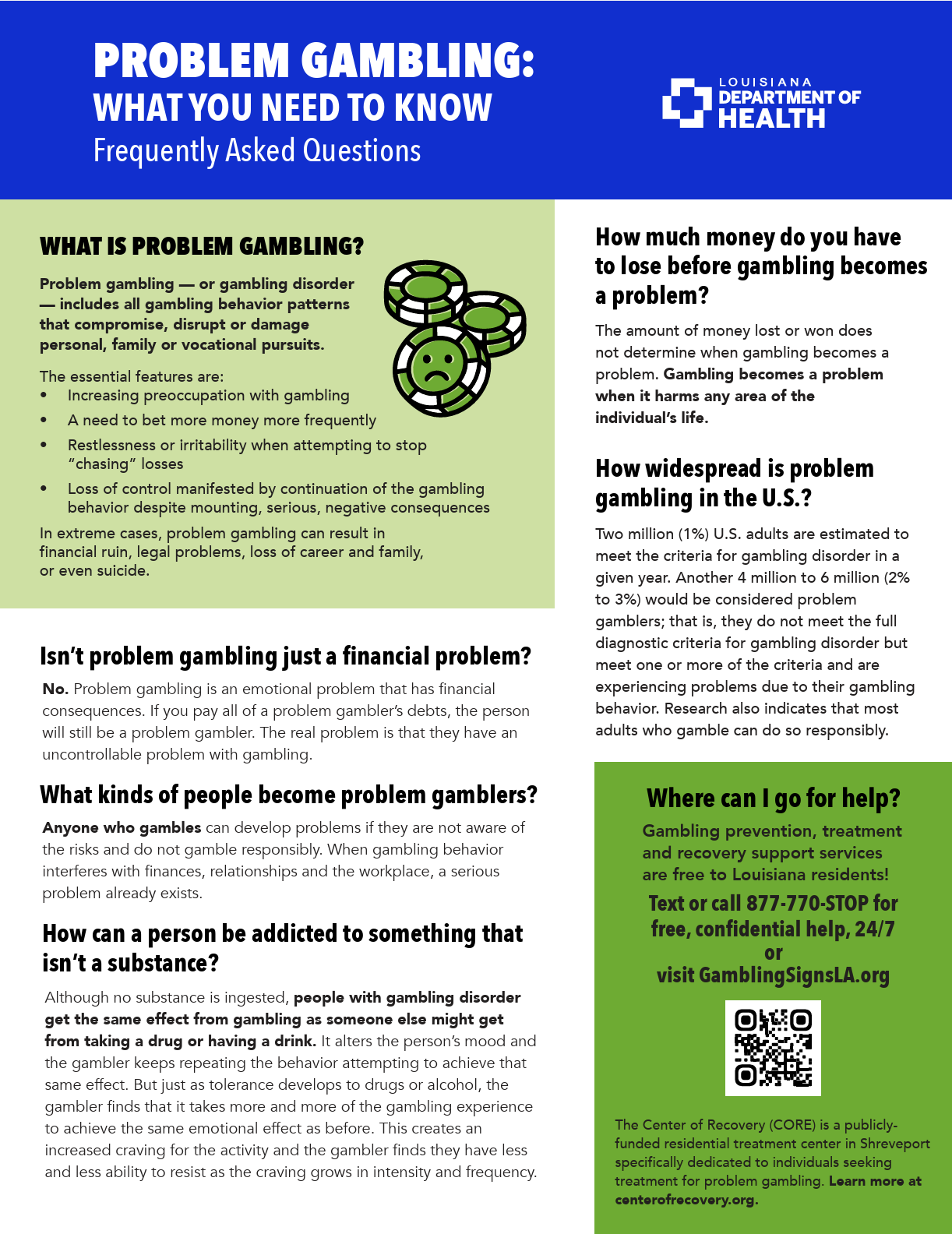
Frequently Asked Questions (FAQs)
about problem gambling
8.5 x 11 Download

Brief Biosocial Gambling Screen (BBGS)
8.5 x 11 Download